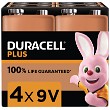
Duracell Batteries, Chargers & Power AdaptersDuracell BatteriesThe story of Duracell begins in the early 1920's with an inventive scientist named Samuel Ruben and an eager manufacturer of tungsten filament wire named Philip Rogers Mallory. Ruben came to the P.R. Mallory Company seeking a piece of equipment he needed for an experiment. But Ruben and Mallory saw an opportunity: uniting the one's inventive genius with the other's manufacturing muscle. Their partnership, which would last until 1975 with Mallory's death, was the bedrock of Duracell International. Samuel Ruben's inventions revolutionized battery technology. Amidst World War II, for instance, Ruben devised the mercury cell, which packed more capacity in less space and was durable enough for the harsh climates of wartime theaters like North Africa and the South Pacific — places where ordinary zinc carbon batteries used in flashlights, mine detectors, and walkie-talkies couldn't hold up. P.R. Mallory manufactured millions of mercury cells for the war effort. The Mallory Battery Company was formed shortly thereafter. In the 1950's, Samuel Ruben went on to improve the alkaline manganese battery, making it more compact, durable, and longer lasting than anything before it. At about the same time, Eastman Kodak introduced cameras with a built-in flash unit that required more power than zinc carbon cells could provide. The cameras needed alkaline manganese cells but in a new size, the AAA. Mallory made them, and also licensed the technology to others because the company, at that time, had no consumer distribution. The photographic demand for power put alkaline cells on the map — and the DURACELL brand was introduced in 1964. Soon, the consumer market for DURACELL batteries rocketed and supplies had to be rationed in the 1970's as manufacturing capacity caught up. Today, Duracell is the world's leading producer of high-performance alkaline batteries. The tradition of innovation started by Ruben and Mallory is still evident in new DURACELL batteries such as DURACELL ULTRA with M3 Technology. Duracell believes there is no limit to the potential of portable power — and as a company will always strive to find innovative and efficient ways to power your life in the future. Duracell Batteries offer stunning performance and are renowned the world over for long lasting high performance. Duracell High-Power Lithium Primary Batteries utilize lithium chemistry to offer high energy density, excellent shelf life, long-term reliability, and high rate capability over a broad temperature range. Duracell PowerPix ™ is a Duracell battery that is designed using NiOx™ Technology, based on nickel oxyhydroxide chemistry, that enables significantly better performance (up to 2 times more pictures*) in digital cameras than regular alkaline batteries. Duracell PowerPix ™ is available in AA and AAA sizes. Duracell NiMH rechargeable batteries utilize nickel-metal hydride chemistry to offer 100s of recharges for the best value for frequent use of your high-drain devices. Duracell offers NiMH batteries in AA and AAA sizes, plus a range of chargers designed to provide you the charge time you need. Duracell Ultra Digital ™ is Duracell's most powerful alkaline battery. Ultra Digital is available in AA and AAA sizes. Rechargeable BatteryA rechargeable battery (also known as a storage battery, secondary cell or battery pack) is technically a group of one or more secondary cells, such as a laptop battery containing six individual cells. However, they are often used to refer to a single cell, such as a NiMH AA battery. These batteries can be restored to full or partial charge by the application of electrical energy, such as through a battery charger. In other words, rechargeable batteries are batteries in which the electrochemical reaction that releases energy can be electrically reversible. Rechargeable batteries come in many different sizes using different chemicals. Commonly used secondary cell (rechargeable battery) chemistries are lead acid, nickel cadmium (NiCd), nickel metal hydride (NiMH), lithium ion (Li-ion), and lithium ion polymer (Li-ion polymer). Rechargeable batteries can offer economic and environmental benefits compared to disposable batteries. Some rechargeable battery types are available in the same sizes as disposable types (eg. AA, AAA, CR123A). While the rechargeable cells have a higher initial cost, rechargeable batteries can be recharged many times. Proper selection of a rechargeable battery system can reduce toxic materials sent to landfills compared to an equivalent series of disposable batteries. For example, battery manufacturers of NiMH rechargeable batteries claim a service life of 100-1000 charge cycles for their batteries.
DuracellDirect.eu is operated by the Duracell licensee: PSA Parts Ltd. London, SW19 3UA, UK. |